 Guru Dev Ji: Swami Brahmananda Saraswati Guru Dev Ji: Jagadguru Shankaracharya Swami Brahmananda Sarasvati ji

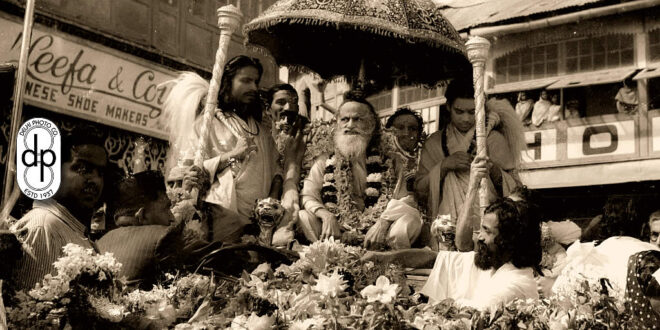
Adi Shankaracharya (8th century) is traditionally said to have established four mathas (monasteries) in India, and to have placed them under the leadership of his four chief disciples. The heads of these four and other monasteries of the Dasanami orders have come to be known as Sankaracharyas themselves, in honor of the founder. They are considered to be the leaders of the ten orders of the Dasanami Sannyasins associated with Advaita Vedanta. The principal eastern (Purvamnaya), southern (Dakshinamnaya) and western (Pascimamnaya) institutions are based at Puri (Orissa), Sringeri (Karnataka) and Dwaraka (Gujarat) respectively. The northern (Uttaramnaya) Sankaracharya seat is at Jyotirmath (also known as Joshimath) near Badrinath. In addition to these four, there are numerous other mathas throughout India, and the seven Dasanami Akhadas (Juna, Niranjani, Mahanirvani, Ananda, Atal, Avahan, Agni – the last is a Brahmacharin Akhada, not a Sannyasin one) that have their own separate administrations and leaders.
The history of Jyotirmath is extremely complicated. According to official accounts, after the period of one Swami Ramakrishna Tirtha in the 18th century, the matha was extinct for about 165 years, before it was revived in 1941, under Swami Brahmananda Saraswati. However, in the meantime, various Sannyasins had claimed to be the Shankaracharya of Jyotirmath, and for some time, many people thought that the Rawal (head-priest) of the Badrinath temple was also the Shankaracharya of Jyotirmath. There are records of lawsuits from the early 1900’s, which show a number of names, each laying claim to the Jyotirmath Shankaracharya title. Before discussing the recent history of this institution, one issue must be properly understood. What does it mean for a matha to have become extinct? In the traditional understanding, the answer is always with reference to the Mathadhipati, the head of the matha. To say that a matha has become extinct is to say that the lineage of successors has petered out, either because of confusions in the line of succession or because of lack of qualified people to lead the matha.
The appointment of Swami Brahmananda Saraswati in 1941 was made by a group of monks and pundits based in Varanasi (the Bharata Dharma Mahamandala, Kashi Vidvat Parishad, and the Akhila Bharatiya Dharmasangha), with the blessings of Swami Bharati Krishna Tirtha, the then Shankaracharya of Puri. Swami Chandrasekhara Bharati of Sringeri also endorsed Brahmananda’s appointment. Thus, right from the beginning of the Jyotirmath’s revival in 1941, the opinions of the heads of other Amnaya mathas were taken seriously into consideration. [1] Another important factor that legitimated the Jyotirmath revival should not be overlooked. This is the involvement of the Hindu kings in north India in the process, and their acceptance of Brahmananda Saraswati. The ruler of Garhwal was important because Badrinath was in his province, while the rulers of Varanasi and Darbhanga were well known and respected as patrons of several religious institutions. India was not yet independent in 1941, and this royal recognition helped in overcoming potential opposition from previous claimants to the Jyotirmath title, and their followers. Brahmananda was selected as he was widely regarded as the epitome of the qualifications mentioned in texts like Mahanusasana and Mathamnaya, which are attributed to Adi Sankaracharya. For the purposes of this discussion, it is immaterial to investigate who wrote these texts, or to question whether Adi Shankaracharya established any mathas at all. It is sufficient to note that the living tradition of Advaita monasticism more or less unanimously accepts these texts and the four Amnaya mathas as originating from Adi Sankaracharya himself.
Swami Brahmananda Saraswati passed away in 1953, but he had not clearly indicated his successor. This immediately caused a problem, as he had initiated a number of disciples into Sannyasa. A few weeks after he passed away, a will was found, according to the terms of which, a disciple called Swami Santananda Saraswati was named as the first choice for succeeding to the Jyotirmath title.
To summarize, the three competing Jyotirmath lineages are:
| 1. Brahmananda Saraswati (1941-1953; revived the matha after a vacancy of 165 years) | ||
| 2. Santananda Saraswati (1953-1980, d. 1997)
3. Vishnudevananda Saraswati (1980-1990; 4. Vasudevananda Saraswati (since 1997 [1990 ?]; disciple of Santananda) |
2. Krishnabodha Asrama (1953-1973; not a direct disciple) | |
| 3. Swarupananda Saraswati (since 1973; disciple of Brahmananda) | 3. Swarupananda Saraswati (1973-1993/4 [1982?])
4. Madhava Asrama |
|
| Not including – Hariharananda (Karapatri), Dwarakesananda, Paramatmananda and Prakasananda (?) | ||
